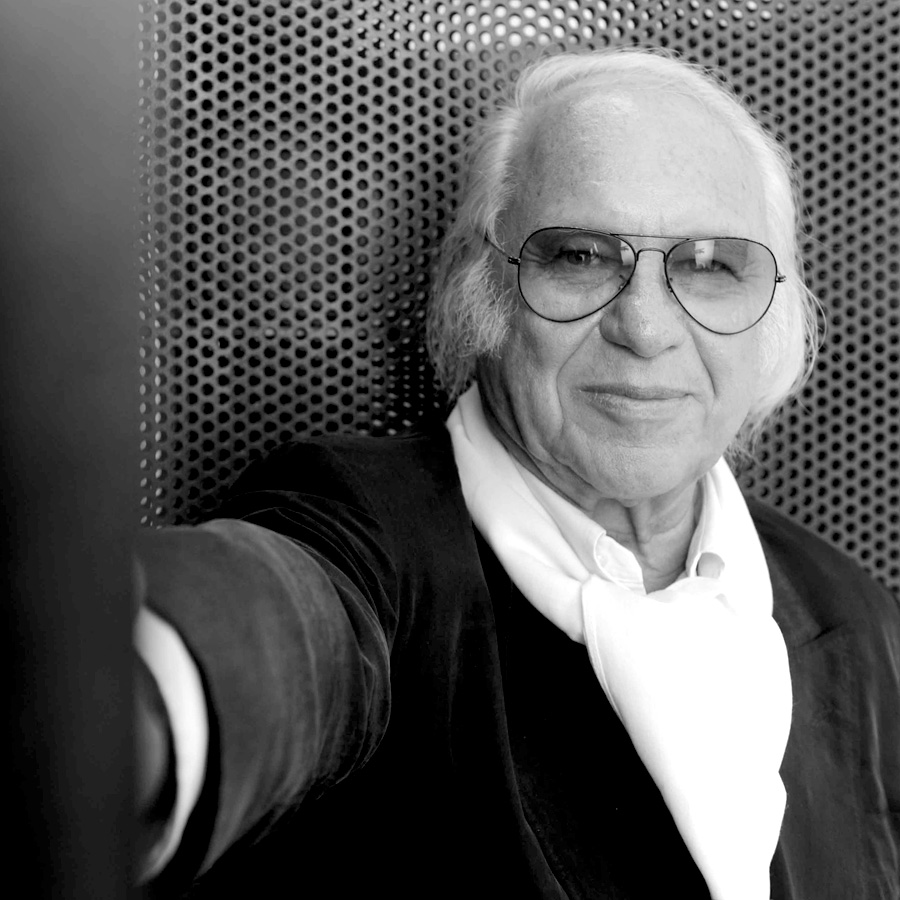
CARL PRUSCHA
Architect [Chair 2004-2014]Born on June 10, 1936, in Innsbruck. Studied architecture from 1955 to 1960 at the Academy of Fine Arts Vienna under Lois Welzenbacher and Roland Rainer. Subsequently completed postgraduate studies at the Harvard Graduate School of Design. Spent his first years of practice in New York at the architectural firms of Paul Lester Wiener and Wallace Harrison, working on urban design projects for Lower Manhattan. Then worked for ten years as a UN and UNESCO government advisor for spatial planning and conservation of cultural heritage in Nepal.
From 1978, professor of planning principles and building research at the Academy of Fine Arts Vienna. From 1988 to 2001, he served as rector of the academy. In 2003, he was a research fellow at the Getty Institute in Los Angeles. Until his retirement from the academy in 2004, he was professor of the design class “Habitat, Environment & Conservation.” He has continued to teach this class as a studio ever since.
Carl Pruscha is a research-oriented architect. His few buildings beyond residential construction reveal a master builder who interprets the form and material of a structure based on the carefully researched conditions and developments of a location. He introduced his students to “anonymous architecture” on many demonstration trips. His second great achievement is that of an inspirer and reformer. This is evident from his tenure as rector of the Academy of Fine Arts in Vienna and the fact that Pruscha is a highly sought-after jury member for art and architecture competitions. Pruscha's architectural theory is based on an “architectural vocabulary that makes use of contemporary technological and social achievements without completely losing traditional identity.” The “neo-colonialist architectural adventures” had massively endangered this identity, and the “invasion [...] of the multinational [...] economy [...] had left individual cultures no opportunity to develop at their own pace.” This has given rise to the theory and practice of “critical regionalism.”
Awards (Selection)
2010 Architecture Award of the City of Vienna
2008 Decoration of Honour in Gold for Services to the Province of Vienna
2006 Honorary member of the senate of the Academy of Fine Arts
2005 Honorary professor, Vienna University of Technology
1999 Honorary member of „Sociedad de Architectura Villa Clara Cuba“
1998 Austrian Decoration of Honour for Science and Art
Projects (Selection)
2000-2019 Sri Lanka
Construction of several prototypes of once indigenous support structures and construction of a prototype elementary school following the destruction of many school buildings after the tsunami.
1983 – 2005 Vienna
Revitalization of historic buildings:
Conversion of the Semper Depot for the K&K Theater into a studio building for the Academy of Fine Arts Vienna.
Conversion of the Baroque Piarist Convent into the Kunsthaus Horn for students of the Academy.
1965-1974 Nepal
various demonstration buildings that aim to further develop the country's indigenous architecture, for example:
CEDA Building as Center for Development Planning commissioned by Ford Foundation
TARAGAON - Hostel Village, near by the Boudhanath Stupa
UNHCR – Settlement for Tibetan refugees
Bibliography (Selection)
2004 Pruscha, Carl: Himalayan Vernacular. Vienna: Verlag Schlebruegge
1975 Pruscha, Carl (publisher): Kathmandu Valley. The preservation of physical environment and cultural heritage. A protective inventory. Vienna: Schroll-Verlag
1967 The Physical Development Plan for the Kathmandu Valley (for the Nepal government)